The Blog
66 posts · page 1 of 6

Randomized Benchmarking: What a Return-to-Zero Test Says About Gate Errors
Random Clifford gates followed by a recovery should return a qubit to its starting state. The measured decay with sequence length reveals an average e…

Zero-Noise Extrapolation: Estimate the Ideal Signal from Noisy Circuits
Zero-noise extrapolation estimates an ideal observable from several deliberately noise-amplified circuit runs. Learn the gate-folding idea and its tra…

Classical Shadows: Estimate Many Pauli Observables from Random Shots
Randomly measure in the X, Y, or Z basis, turn each result into an unbiased snapshot, and reuse the same data to estimate several observables.
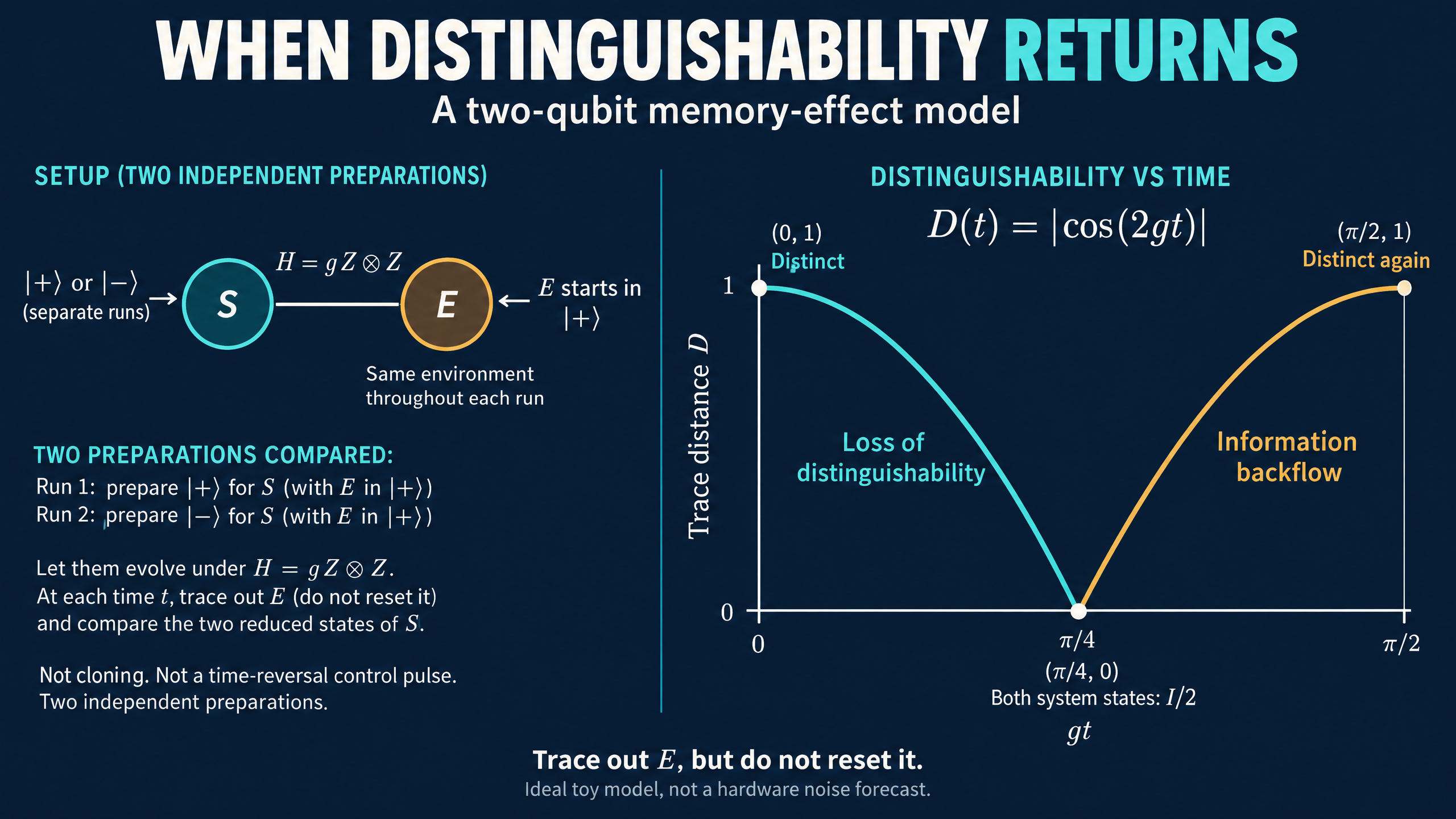
Quantum Memory Effects: When Lost Distinguishability Comes Back
Use a two-qubit NumPy model to see lost distinguishability return, understand information backflow, and learn what a trace-distance revival does and d…
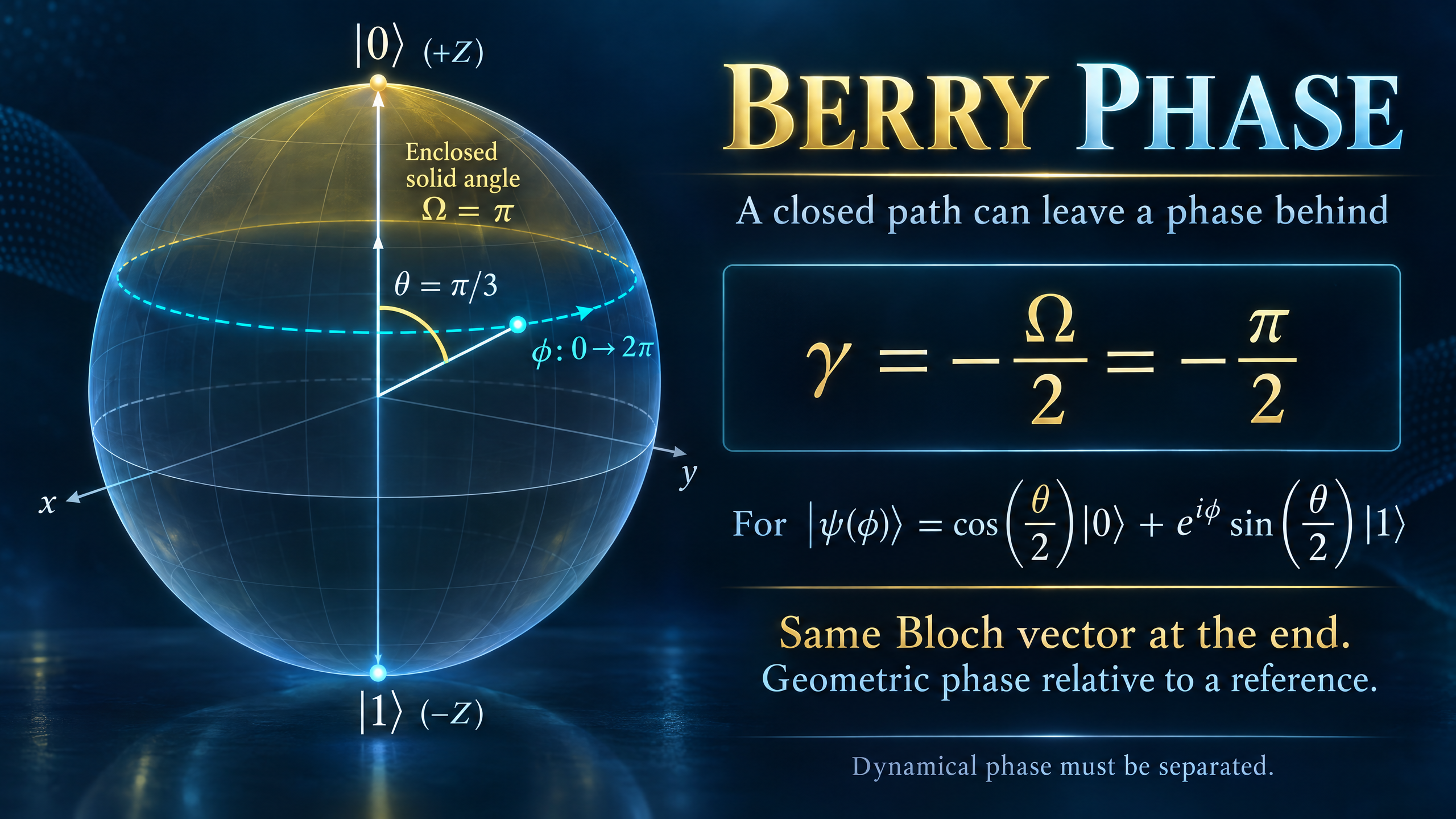
Berry Phase: A Closed Qubit Path Can Leave a Phase Behind
A qubit can return to the same Bloch vector after a loop and still acquire a geometric phase. Calculate a latitude loop, test gauge invariance, and se…
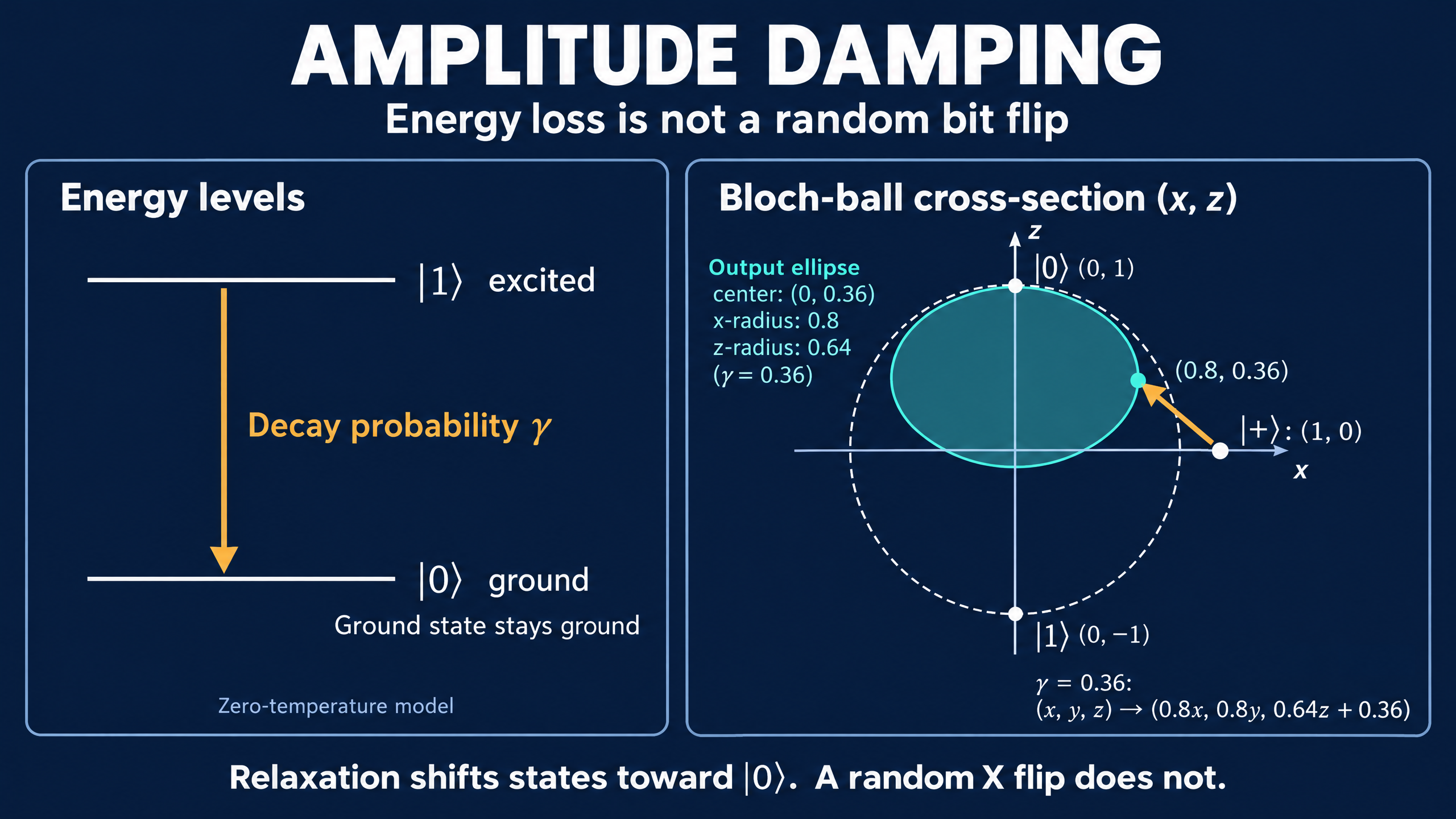
Amplitude Damping: Why Energy Loss Is Not a Random Bit Flip
Model qubit energy loss with Kraus operators, test it in NumPy, and see why a random X gate cannot reproduce amplitude damping on every input.
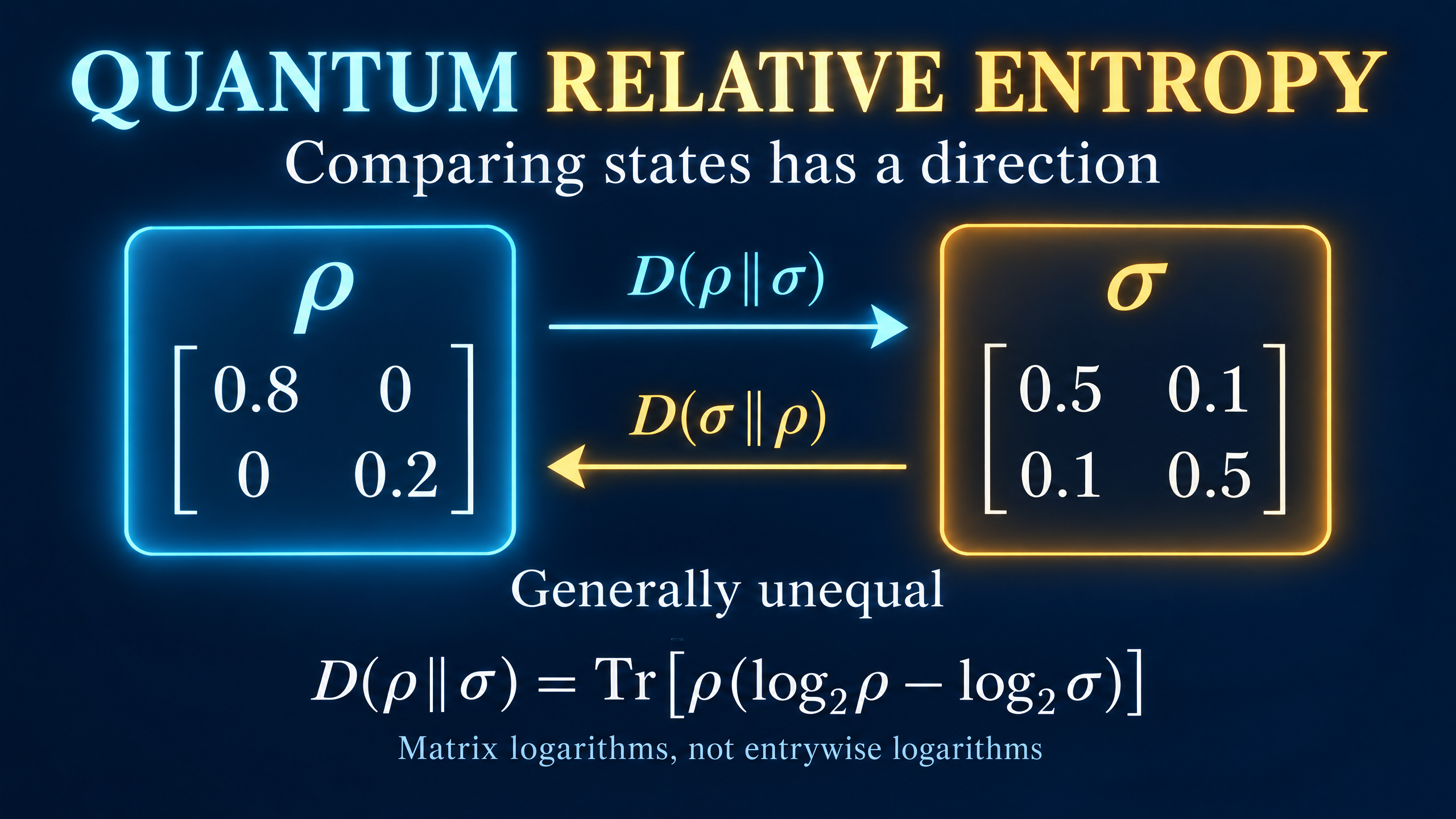
Quantum Relative Entropy: Why Comparing States Has a Direction
Compare two noncommuting qubit states with matrix logarithms. A NumPy example reveals asymmetric relative entropy and shows what happens when both sta…
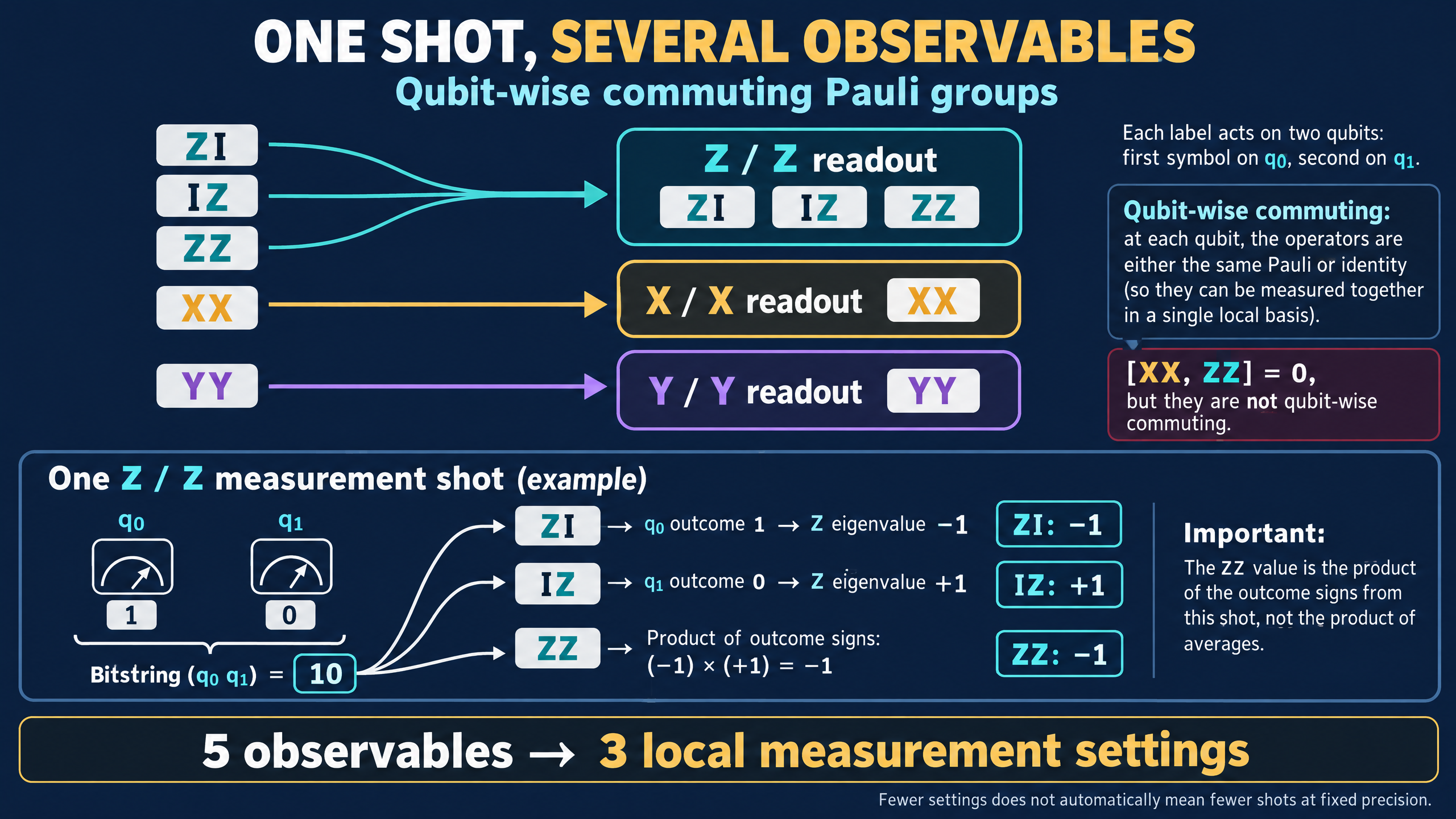
Pauli Measurement Grouping: Get More from the Same Shots
Group compatible Pauli terms, reuse bitstrings in Python, and see why commuting globally does not always mean sharing a local measurement basis.
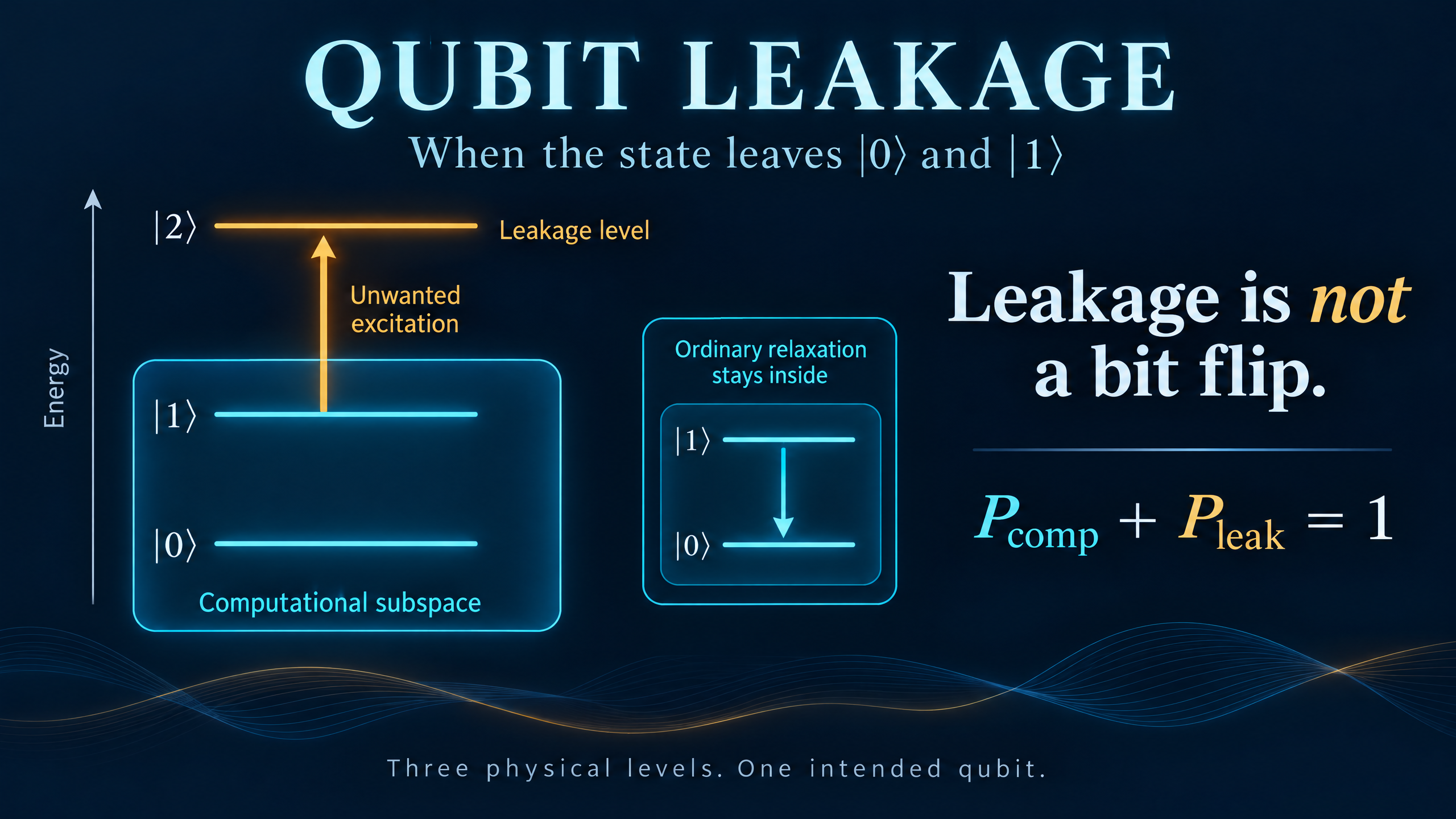
Qubit Leakage: When the State Leaves the Computational Subspace
A real qubit can occupy levels beyond |0> and |1>. A three-level NumPy example shows why leakage is not a bit flip, why renormalizing hides lost proba…

Quantum Erasure Channels: A Missing Qubit Is Not a Reset
Model a flagged erasure with three output states, test it in NumPy, and see why detecting loss preserves surviving coherence but does not recover a mi…

Quantum Discord: Separable Does Not Mean Classical
A separable pair can have zero discord on one side and nonzero discord on the other. Test local measurements in NumPy and see why the basis matters.
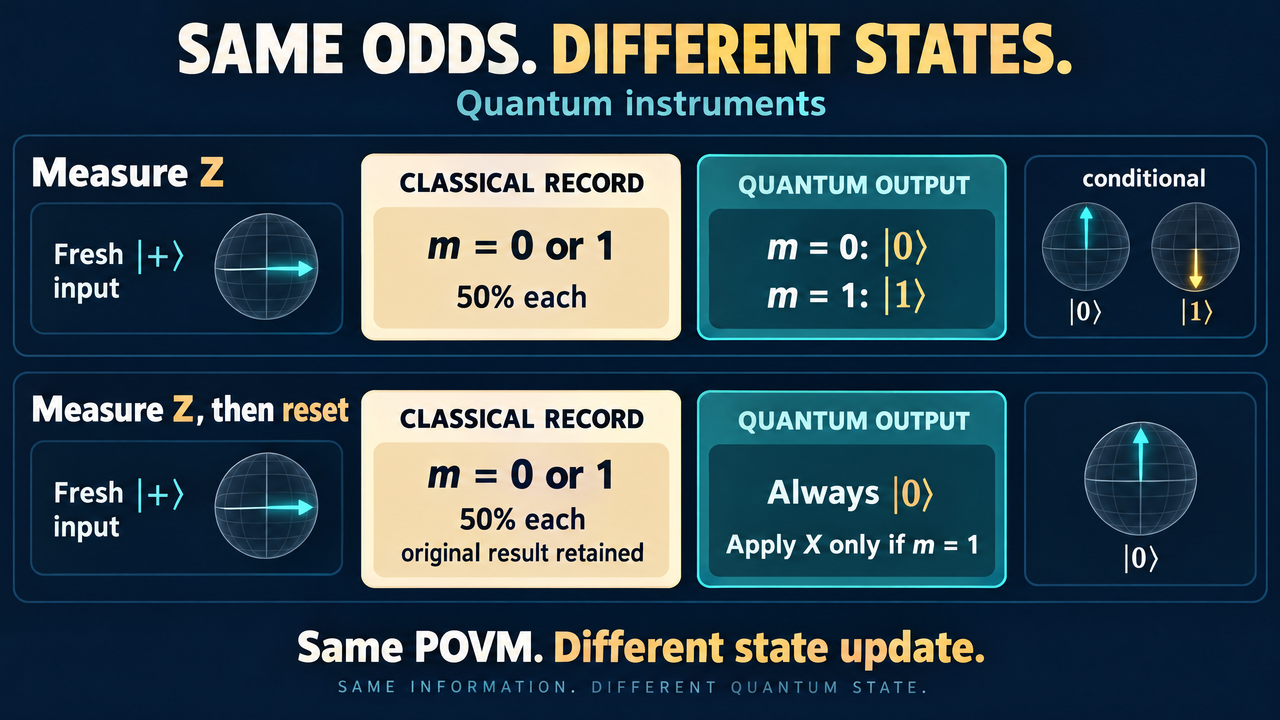
Quantum Instruments: Same Measurement Odds, Different States
Identical measurement counts do not imply identical quantum outputs. Compare a projective measurement with measurement plus reset, and test their diff…